Type of horses:
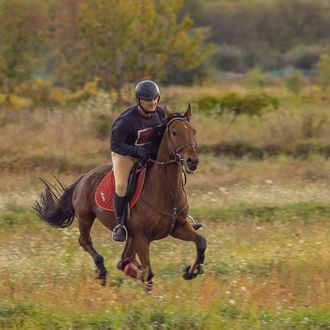
Arab crosses, English full blood crosses, draft crosses, local breeds and Appaloosa.
Nature of horses:
Well schooled, forward going but safe.
Height of horses:
Average of 14.3 hh - 16.1 hh
Weight limit:
85 kg
Tack type:
Trail saddles

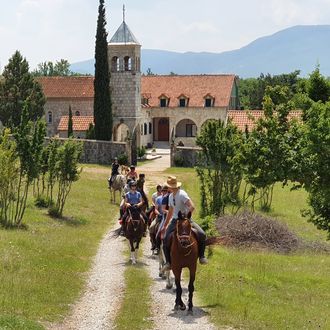
Experience the charming Istrian countryside with this friendly, family run establishment. Your guide has over ten years of experience in horse riding and trail guiding. The ranch is currently home to around seventeen well-kept horses and young stock. They are mainly Arab crosses, English full blood crosses, draft crosses, local breeds and Appaloosa. They specialise in small groups to ensure quality riding and personal attention to each guest.
Istria is situated in the north-west of Croatia, close to the borders of Italy and Slovenia. It is the largest green oasis of the Northern Adriatic. The coast and its surrounding islands are covered with pine woods, whilst its streams flow to the sea through deep valleys and gullies. This leads some to believe the ancient, local myths of giants. Rolling hills overlook the fields and valleys with little towns perched on the peaks. Stunning views of white topped mountains, lush fields, plateau, valleys, vineyards, olive groves and the sea can be experienced across the land.
The mild Mediterranean climate enjoys warm, dry summers and mild, pleasant winters. The average temperature in the coldest months amounts to 6°C, whereas in the warmest averages 30°C.
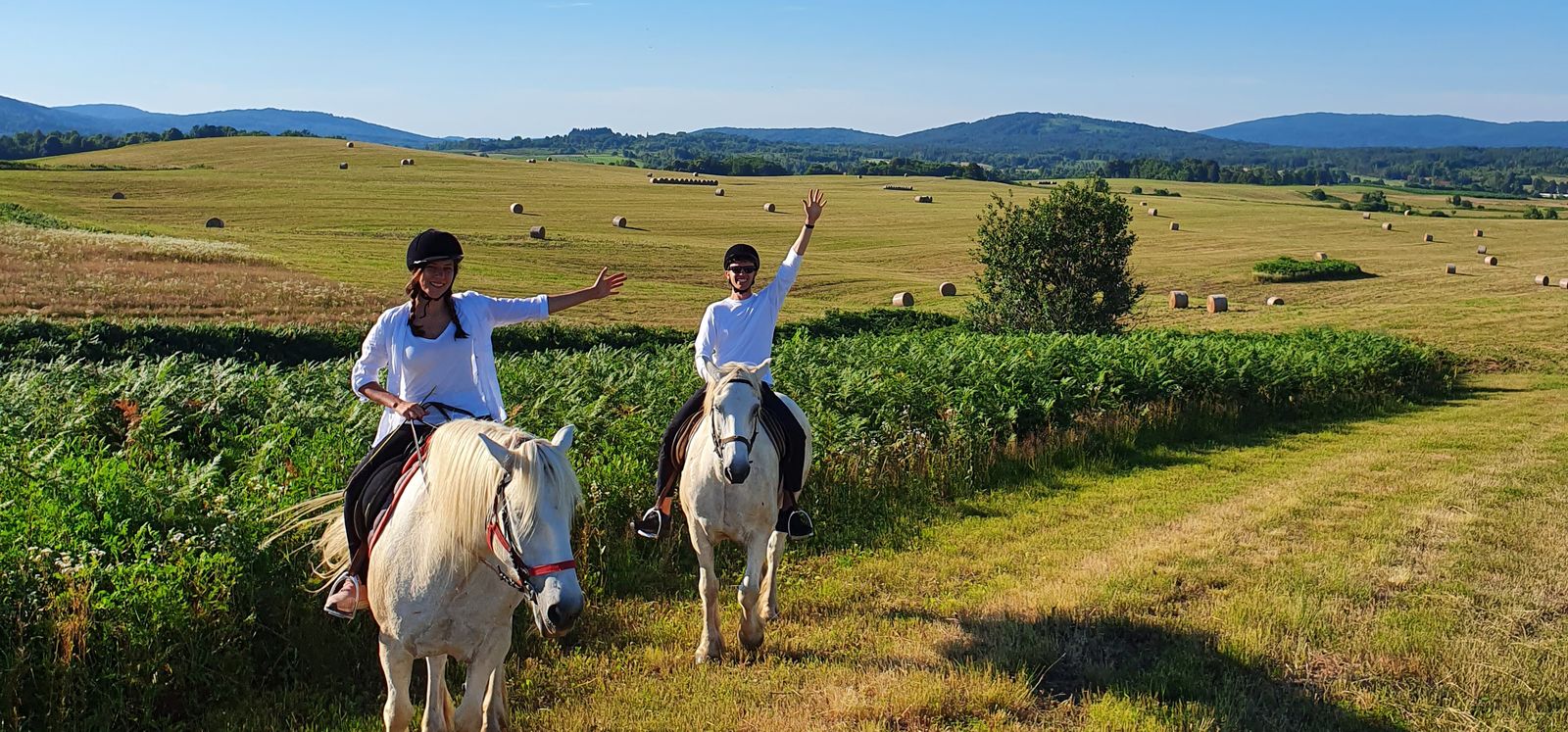
The Central region of Istria is known for its beautiful, lush, unspoilt and underpopulated areas. It provides plenty of wilderness and greenery where life is pleasantly laid back, with very friendly people where ever you go. It is not only ideal terrain for riding, but also for biking, hiking and sightseeing combined with comfort and a local touch of local luxury. Everything is warm–hearted and friendly here; nature, towns and people. Welcome to the land of history, beauty and vitality!
We can also arrange self catering accommodation if you wish to continue your holiday in this fabulous area.
See Programmes.
The programmes are based on their small, family run farm in a hamlet. This is an ideal place to switch off and relax - no noise, no traffic and no pollution. The farm consists of several buildings around a courtyard, built in the traditional Istrian style (stone and red tiled roofs), with all modern amenities.
There are five guest rooms, each with private bathroom facilities and each with either two single beds or a double bed. All rooms were renovated in the spring of 2009, furnished in lovely colours and solid rustic furniture, and are now non-smoking rooms. The rooms have wooden floors and some have wooden ceilings with beams. The bathrooms are spacious with either a large shower or bathtub.
There is central heating for the chilly mornings and evenings in early spring and autumn. Views are to the garden or the green valley at the back of the house. There is also ample parking if guests wish to rent a car.
One room is situated in the main family house but with a separate entrance from the outside to ensure privacy. Four rooms are in a separate building - which has been arranged into a u-shape around a small courtyard where meals can be enjoyed outdoors in the summertime. On one side of the building there is a common area for the guests with a kitchen, living/dining room and open fireplace.
During the trail programme guests spend two nights in an agriturismo with a very nice restaurant (but clients still keep the rooms on the farm so no need to pack).
The food and wine offered will be traditional and organically produced to leave a lasting impression of the local countryside. They pride themselves in serving freshly made meals using local ingredients - no frozen supplies! Many products are grown on the farm, or supplied by the local neighbours. Chickens provide fresh eggs and there is a myriad of Istrian traditional dishes for guests to taste. Although Croats are known as big meat eaters, vegetarians are also catered for.
There is also the option of wild game. For those that have an interest in game hunting, excursions can be arranged to experience catching your own evening meal, depending on the season of course.
Their local food is wholesome and often consists of home-made thick soups (based on various beans,herbs and potatoes), thin soups, meat stews (wild boar, venison, beef, rabbit) served with handmade varieties of pasta (gnocchi, fuzi, pljukanci etc). Fish caught locally is often on the menu. Of course, they also enjoy barbecues and this is usually offered at least once a week (weather dependent).
Another dish that guests will have the opportunity to taste consists of potatoes and meat cooked in 'cripnja' - a speciality that is common to other parts of Croatia, but with slight variations. A large tray with food is placed on the fireplace, and covered with an ironcast lid, and then submerged under ambers. Food then cooks in its own juices and is better than any roast prepared in the regular oven.
Of course, like the rest of the Croatian coastline they also have prosciutto (pršut) and cheese. Istrian pršut has special international recognition and is now a trademark.
Local drinks include red and white wine and a variety of strong drinks: grappa, walnut brandy, biska (misteltoe liquor), etc.
Guests relax and enjoy breakfast and dinner at the accommodation with local wine, soft drinks & water included at dinner time. Breakfast is local ham and cheeses, including a soft cheese often eaten with sugar. Home made conserves accompany the freshly baked delicious bread and fruit is always available.
A light lunch is taken en route, this is either a picnic to take with you, a stop in a local tavern for a snack, or your guide will buy something as you go (depending on the day's itinerary).
This beautiful area offers an idyllic setting for hiking and biking around the local area. If relaxation is your preference then you can take it easy around the farm or take part in farm activities (depending on the season).
Languages: English, German, Croatian, Italian, Spanish and some French is also spoken by the host.
Health requirements: Fit & Healthy and able to withstand long hours in the saddle.
Age limit: 18 and over
Tuition: No
Included: Accommodation, breakfast, lunch on trails, dinner, guide, transportation of luggage and riding as detailed by the programmes.
Not included: Flights, airport transfers, insurance, tips and extra drinks.
We highly recommend flights to Pula. If you are flying to Trieste we would like to encourage guests to hire a car and we will provide direction assistance.
Low cost flights (may be seasonal) include:
Ryanair - Bristol to Trieste
Ryanair - Stansted to Pula and Trieste
Transfer arrangements are available at an additional fee (payable on location):
Pula: £50 per car (max 3) return (40 mins away)
Rijeka - £95 per car (max 3 pax) one way (1 ½ hrs drive)
Trieste - £150 per car (max 3 pax) one way (2 ¼ hrs drive)
Airport: Pula
Alternative Airport: Trieste (Ronchi)
|
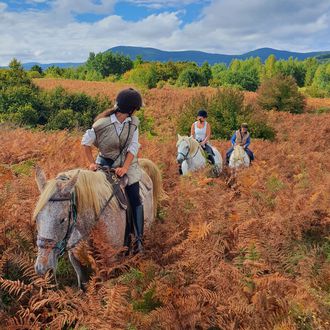
Riding from the west coast through the inner land of Istria is a special experience that every true nature and horse lover will be delighted with. The magnificent horses that you will ride are specially trained for this type of terrain. This beautiful trail is for riders of an intermediate standard and above. You will experience stunning countryside, the trail takes you through medieval towns, valleys, open countryside and over rolling hills whilst enjoying comfortable accommodation and mouth-watering local dishes. Your luggage and personal belongings will be transported in the support van. Itinerary Day one: Arrive at the airport where you will be met and transferred to the farm/ranch, or alternatively arrive by your own car. Settle into your accommodation in the small village of Karnevali, which is 4km from the market town of Žminj. Once you are settled in, you will enjoy your first evening meal and be introduced to your host family and fellow riders. Schedule permitting, we may already visit the stables and look around the ranch in the afternoon/evening. Day two: After a traditional breakfast of fresh bread/rolls, ham, cheese and home-made preserves, you will go to the stables where a horse will be selected for you. Today is an easy riding day through open countryside, vineyards and olive groves. The first day’s riding will ensure that you are suited and happy with your mount. The first stop, mid-morning, will be at the small but fascinating caves of Feštinsko Kraljevstvo, which were accidentally discovered in the 1930’s underneath a vineyard, and are now open to the public. A 20-minute visit (entrance fee included) in the ‘Kingdom of Feštini’ will help show what forms the foundations of the Istrian Peninsula. A complimentary Medica (honey-flavoured grappa) will help to enhance the illusions and treasures that this underground little world has to offer. This will be followed by a leisurely ride, across the former border area between the Hapsburg and Venetian Empires, to the medieval town of Svetvinčenat. The Grimani Castle dominates the now peaceful town, which once would have been the first defensive point on the Venetian side of the border. It has a charming church which overlooks an elegant square where many events are held, such as a competition for the most beautiful goat! The castle also attracts some of the biggest names in Croatia to come and perform in this otherwise sleepy settlement. Return home along forest trails to a delicious dinner and a well-deserved rest. Day three: Your journey today takes you down into Draga, the dry section of Lim Fjord. The fertile valley divides Istria into two parts, and in Roman times was the border between two cantons. Halfway along the valley the ghost town of Dvigrad awaits you. The town was probably abandoned after the plague in the 16th century but still many legends abound as to why the inhabitants deserted their home. The dominating twin fortresses will be your backdrop for a well-earned picnic lunch. It is reputed that Captain Morgan, the famous pirate, sailed into Lim Fjord and stashed some of his treasures nearby. The village of Mrgani, above the fjord, is probably named after the Captain, or his descendants. His gold is still to be found. There are the most amazing views of the valley from Dvigrad, and each season’s colours contribute to an ever-changing ‘landscape’. Following an exploration of the ruins, you will return up the valley, through tranquil villages, which often seem more deserted than Dvigrad itself, ending back at the farm in Karnevali. Although more and more visitors are drawn to discover the Istrian hinterland, it is still a unique pleasure to meander along the rural back roads. Day four: Today there will be a short morning ride to the hamlet of Draguzeti, where you shall have time for refreshments and a light lunch. This will be followed by an afternoon excursion to Rovinj, by car or by van. Rovinj is Istria’s most picturesque coastal town, better known as the St. Tropez of the Adriatic. Its old town has a distinct Venetian architectural influence. You will have a chance to visit the commanding church of St. Euphemia, offering marvellous views of the Rovinj archipelago and the western Istrian coastline. There will be time for exploring the town’s delightfully twisty streets, its attractive harbour, or weather permitting, having a swim in the clear Adriatic Sea. Return to Draguzeti for your evening meal and a good rest before tomorrow’s longer riding day. Day five: Today you will experience new and varied landscapes as you ride eastwards into the heart of the Istrian peninsula. You will ride through the dense Cere Forest, known for its seasonal mushrooms, then through fields and villages with more and more of the peninsula opening up to you - you will be surprised by the variety of terrain, flora and fauna. At the end of the plateau, you will start a 3km descent into the Rasa Valley. You will enjoy a picnic lunch on the bank of the River Rasa. You will then have a well deserved easy ride along the soft green river banks, with opportunities to gallop, and enjoy the fresh air in the traffic-free surroundings. By late afternoon you will reach the family hamlet of Gologoricki Dol, nestled in a lush ravine, far from the madding crowd. This will be your resting place for the night, and this evening you will enjoy a special meal, traditionally cooked in a ceramic pot (cripnja) under the glowing embers of an open fire. Day six: After breakfast, you will head to Cerovlje – dramatically situated high above vineyards, and offering stunning views of the sprawling Istrian countryside. This will be a memorable day of riding across an undulating landscape, dotted with hilltop villages and lonely churches proudly fighting the forces of time. By lunchtime you will reach the once-fortified town of Beram where you will have a typical Istrian lunch, and see the famous 15th century frescoes in a little chapel just outside the town. In the late afternoon you will reach Rafo’s ranch, which will offer rest for the horses, and a delicious local dinner for the riders, including a taste of truffles, typical to this region. Overnight in either local rooms, in a tent, in a hay barn (weather permitting) OR return to Karnevali (30 min drive). For those with yet more energy left, a short evening visit to medieval Motovun is possible. Its old town, situated high on a hilltop, is particularly alluring, with a colourful old church and a rampart walk with panoramic views across the entire region. This area differs completely from the entire surrounding karst region because of its wildlife and moist soil. The most common tree is the English or Brown Oak, and it is under these trees, in the Motovun Forest that the rare and expensive fungus truffle is to be found. It grows underground and trained dogs or pigs are used to sniff out the pungent speciality. Day seven: This morning you will take your horses on a homebound trip, traversing the charming countryside, alongside ancient stone walls, with rich red soil adding to the colour and a contrast to the karst rock formations. Country roads will bring you to the middle-age town of St. Peter in the Woods, where Pauline monks have renovated the original Benedictine church and monastery dating back to the 13th Century. After a picnic lunch you will continue through fields and small vineyards. Riding along the slow and windy roads will be a perfect time to reflect and feel at one with nature. You will finally return to the stables where you began, saying goodbye to your dutiful horse that has carried you proudly during the last seven days. You will spend the last night in Karnevali and enjoy a farewell dinner. Day eight: Breakfast and departure. Please note this itinerary may vary. |
|
| Minimum group size: | 3 |
| Maximum group size: | 8 |
| Ability description: | Confident intermediate, comfortable in all paces and with plenty of experience of riding outdoors. You need to have a reasonable level of fitness. |
| Type of ride: | Trail. |
| Total riding time: | Five and a half days riding with an average of 4 - 7 hours in the saddle (25 - 30 kms per day) |
| Departure dates: | 2012: April 14, 28; May 26; June 16; July 7, 28; August 25; September 15; October 6, 27. Sunday arrivals are also possible on request. |
| Pricing: | See Pricing |
|
The stationary programme is based in the grounds of this family run farmhouse, offering comfort and all modern amenities. This programme is suited to those wanting a good mix of riding and the opportunity to explore the area and take part in other activities. The local food and wine offered will be traditional organically-grown produce that will leave a lasting impression of the countryside. The riding base is set in the middle of the peninsular, locating it in an ideal area with stunning attractions being no more than an hour away. We highly recommend a visit to Rovinj, Brujuni and Motovun. Day one:
Arrive at the airport where you will be met and transferred to the farm/ranch, or alternatively arrive by your own car. Settle into your accommodation in the small village of Karnevali, which is 4km from the market town of Zminj. Once you are settled in, you will enjoy your first evening meal and be introduced to your host family and fellow riders. Schedule permitting, we may already visit the stables and look around the ranch in the afternoon/evening. Day two:
After a traditional breakfast of fresh bread/rolls, ham, cheese and home-made preserves, you will go to the stables where a horse will be selected for you. Today is an easy riding day through open countryside, vineyards and olive groves. The first day’s riding will ensure that you are suited and happy with your mount. The first stop, mid-morning, will be at the small but fascinating caves of Feštinsko Kraljevstvo, which were accidentally discovered in the 1930’s underneath a vineyard, and are now open to the public. A 20-minute visit (entrance fee included) in the ‘Kingdom of Feštini’ will help show what forms the foundations of the Istrian Peninsula. A complimentary Medica (honey-flavoured grappa) will help to enhance the illusions and treasures that this underground little world has to offer. This will be followed by a leisurely ride, across the former border area between the Hapsburg and Venetian Empires, to the medieval town of Svetvinčenat. The Grimani Castle dominates the now peaceful town, which once would have been the first defensive point on the Venetian side of the border. It has a charming church which overlooks an elegant square where many events are held, such as a competition for the most beautiful goat! The castle also attracts some of the biggest names in Croatia to come and perform in this otherwise sleepy settlement. Return home along forest trails to a delicious dinner and a well-deserved rest. Day three:
Your journey today takes you down into Draga, the dry section of Lim Fjord. The fertile valley divides Istria into two parts, and in Roman times was the border between two cantons. Halfway along the valley the ghost town of Dvigrad awaits you. The town was probably abandoned after the plague in the 16th century but still many legends abound as to why the inhabitants deserted their home. The dominating twin fortresses will be your backdrop for a well-earned picnic lunch. It is reputed that Captain Morgan, the famous pirate, sailed into Lim Fjord and stashed some of his treasures nearby. The village of Mrgani, above the fjord, is probably named after the Captain, or his descendants. His gold is still to be found. There are the most amazing views of the valley from Dvigrad, and each season’s colours contribute to an ever-changing ‘landscape’. Following an exploration of the ruins, we will return up the valley, through tranquil villages, which often seem more deserted than Dvigrad itself, ending back at the farm in Karnevali. Although more and more visitors are drawn to discover the Istrian hinterland, it is still a unique pleasure to meander along the rural back roads. Day four:
Today there will be a short morning outing to the nearby market town of Zminj, with its interesting churches, quiet old town and bustling downtown. Zminj has a population of approximately 850 inhabitants, and 112 small villages and hamlets belong under its jurisdiction increasing the population to about 3500. The monthly fair encourages a vast amount of villagers to come to town to meet one another. Zminj is home to the Chakavska Parliament, which serves to preserve the most authentic Istrian language/dialect. After time for refreshments in the town (not included), you will return to the farm for a light lunch, This will be followed by an afternoon excursion to Rovinj, by car or by van. Rovinj is Istria’s most picturesque coastal town, better known as the St. Tropez of the Adriatic. Its old town has a distinct Venetian architectural influence. You will have a chance to visit the commanding church of St. Euphemia, offering marvellous views of the Rovinj archipelago and the western Istrian coastline. There will be time for exploring the town’s delightfully twisty streets, its attractive harbour, or weather permitting, having a swim in the clear Adriatic Sea. Return to the farm for another delicious evening meal and rest before tomorrow’s longer riding day. Day five:
Today you will experience more beautiful landscapes as you ride northwards into the heart of the Istrian peninsula. You will ride across the upper Draga Valley to the town of Tinjan, famous for its prsut (dried, smoked ham). You will picnic here before continuing along stone tracks, and through fields and villages, with more and more of the peninsula opening up to you - you will be surprised by the variety of terrain, flora and fauna. By late afternoon you will reach the area below the ancient hilltop town of Motovun. The horses will stay at their overnight ranch at Motovunski Novaki, while you will be transported back to Karnevali (approx. 30min drive) in time to taste some more of the local specialties. Day six:
After breakfast, re-join the horses and continue to Motovun. Its old town, situated high on a hilltop, is particularly alluring, with a colourful old church and a rampart walk with panoramic views across the entire region – a perfect setting for your picnic lunch. After free time, you will descend with the horses to the soft, green shores of the River Mirna (or Quiet River), a perfect place for a full gallop to your heart’s delight. This area differs completely from the entire surrounding karst region because of its wildlife and moist soil. The most common tree is the English or Brown Oak, and it is under these trees, in the Motovun Forest that the rare and expensive fungus truffle is to be found. It grows underground and trained dogs or pigs are used to sniff out the pungent speciality. The afternoon highlight will be a visit to a local wine cellar, nestled amongst a carefully manicured vineyard, where you will be able to taste the local wines (included). Return to the local stable to shelter the horses and take the short drive back to Karnevali, in time for the evening meal. Alternatively spend the night in the nearby local accommodations, in a tent or in a hay barn (weather permitting). Day seven:
This morning you will take your horse on a homebound trip, traversing through the charming countryside, amongst the ancient stone walls with rich red soil adding to the colour, and a contrast to the karst rock formations. Riding along the slow and windy roads will be a perfect time to reflect and feel at one with nature. Day eight:
Breakfast and departure. Please note this programme may vary. |
|
| Minimum group size: | 3 |
| Maximum group size: | 8 |
| Ability description: | Novice to experienced. Some knowledge and experience of horse riding required. |
| Type of ride: | Based with daily trails |
| Total riding time: | Riding over 5 and a half days with an average of 4 - 7 hours in the saddle. |
| Departure dates: | 2012: April 7; May 12; June 2, 23; July 14; August 4; September 1; 22, October 13; November 3. General arrivals are on Saturdays but Sunday arrival is also possible on request. |
| Pricing: | See Pricing |