• Forts and Castles of Shekhawati
• Shekhawati and Aravalli Range Horse Safari
• Taalchappar Blackbuck Sanctuary Ride
Type of horses:
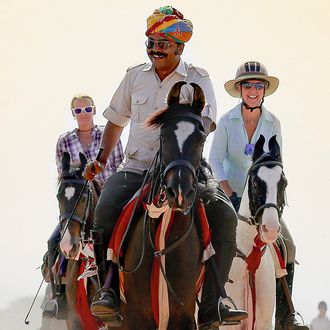
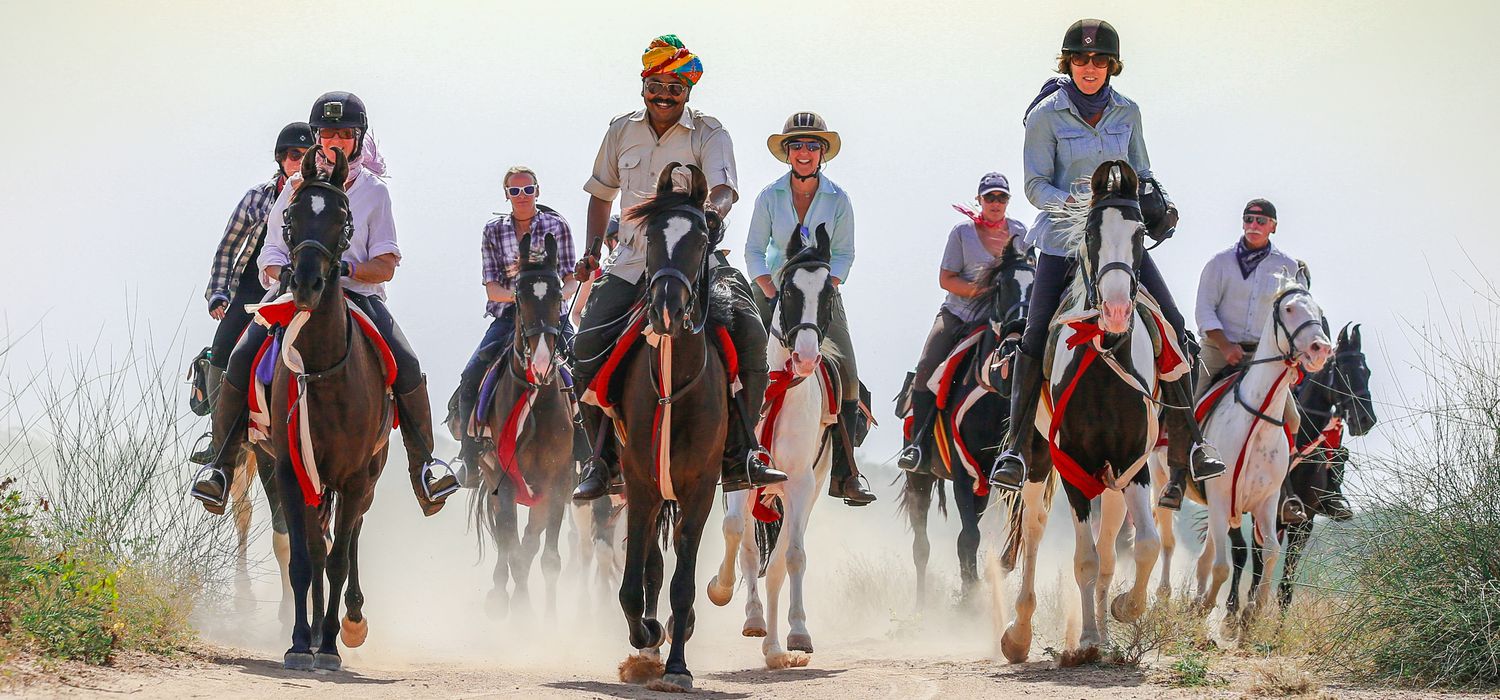
All Indian pure breeds - Marwaris, Kathiawadis and the Sindhis; for the layman they are horses with curly and touching ears.
Nature of horses:
Very spirited and lively but well schooled and responsive to the rider.
Height of horses:
14-15.2 hh
Weight limit:
90kgs
Tack type:
Indian cavalry 'Sawar' saddles - these are strong and simple but comfortable for both horse and rider. We recommend you take a seat-saver if you would like one.

These breathtaking and luxurious Indian safaris combine the thrill of riding through the magnificent former Raj kingdoms with the experience of riding purebred Indian horses such as the Marwaris, with their beautiful curled ears, and the Sindhis. As you ride across this unspoilt terrain, you will interact with locals as you ride through untouched villages, enjoy a taste of the desert lifestyle, view the flora and fauna of Rajasthan and listen to the rhythms of folk musicians. This is the way to see real India, sharing the experience with likeminded people who have a love for horses, nature and the environment. Your experienced guides have taken special care to ensure that the routes are as varied and interesting as possible and that you find your selected horses to be well bred, appropriately schooled and a pleasure to ride.
During these horse riding adventures, lunch halts and campsites are in unique settings. The riding routes pass through semi-deserted terrain, forests, salt lakes, marshes and flat grasslands. Riders have the opportunity to trot, canter and to gallop at times. The support team has been carefully selected to consist of experienced riders, a talented cook (ex-army!), organised camp staff, folk musicians, efficient grooms and drivers. The hosts of these rides feel strongly that it is important to preserve the Indian breeds of horses and effort has been made to maintain the pure blood lines. The stables here use primarily Marwari horses with a few Kathiawari and Sindhi horses. The Marwaris were the traditional battle horses of Rajputana and here you will be able to experience how different they feel as you ride them across their homeland.
Many of the itineraries take you to spectacular horse fairs where you will be stunned by the number of horses, camels and cattle, the quality of many of the animals on show and this real taste of old style India. These tours are a delight for photographers, those with a love of history or simply keen riders wanting to explore this fascinating country.
These are top quality riding holidays, listed as one of the top ten riding destinations in the world by The Daily Mail and The Sunday Telegraph. If you are thinking of riding in India then they are the ultimate horseback safaris, providing you with quality and well-maintained horses, luxurious camps, experienced and conscientious guides, plenty of riding hours and that special taste of the real India.
See Programmes.
Accommodation is split between one of the best palace hotels in Rajasthan, selected guests houses on route and luxurious tented campsites when you are on safari.
Usually on arrival at your destination you spend 2-3 days at the palace hotel, which is a fascinating blend of European and Rajput architecture, though this depends on your chosen itinerary. The palace has spacious lawns, a billiards room and a swimming pool.
The mobile camp consists of tented accommodation in Shamiana type oriental tents on twin sharing / single basis. Each tent cubicle is provided with cots, chairs, linen, white sheets, quilts, blankets, pillows, mosquito nets, hot water bottles and a full floor covering. Lighting in tents is by kerosene lamps. The dining tent and kitchen are lit by petromex/gas lamps.
There are also toilet and bath tents. These are one piece units with a covered roof and zippers. The bath tents have wooden floors, foot mats and hangers for clothes. The toilet tents have a wooden / metal commode with a pit. Hot water for bathing is provided in buckets both in the morning and evening. Soaps, towels, looking mirrors and wash basins are provided.
Your food is prepared by an-ex Army cook who has a lifetime of experience cooking for officers moving with the Paltans. In army language this type of lunch is called 'haver sack'. The variety of menus is astounding and no two lunches have a common menu. Instead of giving individual lunch boxes, a buffet is laid out. Tea/Coffee is served piping hot in insulated containers. Portable stools are carried in the jeep, to be used by the guests at lunch time.
The dining tent has regular sit down arrangement with chairs and tables. Fixed menu meals with a choice of Indian and continental dishes for every meal are provided. Tea and coffee after each meal and soup at dinner is for unlimited consumption.
The camp is set out with a large rectangular courtyard for camp fires and folk entertainment. Each evening a different demonstration or talk is given ranging from local horse medicine, wildlife, Indian cooking or the caste system. The dining tent is on one side while the other three sides are guest tents. The adjacent space is utilised for bath and toilet tents.
These rides are point to point so each day will bring new and exciting activities. Aside from the spectacular landscape, you will have the opportunity to visit a private home and meet the family members, learn how to cook traditional Indian dishes and share them with your group and enjoy the nightly folk music performed by the team.
Some guests might choose to relax during a massage after a long day of riding whilst those visiting in March can experience the vibrancy and excitement of the world famous Balotra horse fair. Ladies have the opportunity to see how Indian henna is applied and might even choose a design for themselves to be painted on.
Non riders are welcome to accompany their riding partners on the trip and travel by jeep to each destination. They are an integral part of the trip and participate in all activities except riding.
Languages: English
Health requirements: In order to enjoy this trip you have to be fit and a confident rider on all paces. Riders should be prepared for 25-40 kms of riding a day.
Age limit: No specific age limit but see health requirements.
Tuition: No.
Included: Accommodation (not all, depending on itinerary), meals and horse riding as per itinerary.
Not included: Flights and transfers, travel insurance, accommodation not mentioned as included in itinerary, pre and post safari tours/drinks/transfers/gratuities and personal insurance, telephone calls, faxes and internet, alcoholic drinks.
Flights operate to New Delhi and Jaipur from London airports.
Transfers will be organised for you at an additional cost.
A Development fee has been levied from 01st December 2011 onwards for all passengers (International or Domestic) departing from Delhi Airport
Charges are as follows
- Domestic Flights - 200 Indian Rupees per person
- International Flights - 1300 Indian Rupees per person
Airport: Indira Gandhi International Airport, New Delhi
Alternative Airport: Sanganer International Airport, Jaipur
|
This safari creates the age-old charm of horseback travel. Let your senses sway to the romance of the desert as you pass forts, palaces and historical landmarks. Gallop on the deserts, plains and canter through the hills. Spend the evening in luxurious camps and swing to the folk dances. Day 1: Arrive at New Delhi airport. There are two options; one is to arrange your own hotel in Dehli and transport to Nawalgarh the following day. The other option is to take an early flight into Dehli (BA, arrives early in the morning from Heathrow), arrange for transport to meet you at the airport and transfer you to Nawalgarh the same day. The journey takes around six hours and you will arrive in Nawalgarh in the evening. We are able to assist you with hotels and transfers and please advise us of your plans before booking. Day 2: Delhi - Nawalgarh Morning drive to Nawalgarh of around six hours (can be arranged at an additional cost). Arrive in Nawalgarh by lunch time an area steeped in romantic history, chivalry and valour. Formerly known as Rajputana, it boasts of the finest fortress-palaces, built with sandstone quarried from the land itself. In contrast with the pastel shades of the desert landscape are the brightly coloured costumes of its handsome people. With its turbaned men and richly jewelled women, it’s Havelis and villages, its fairs and festivals, Rajasthan beckons you. A visit to such locations gives you a rare insight into the world of princely India now largely lost. The Safari tour incorporates some of these atmospheric locations. You will receive a Royal Welcome on arrival at the Roop Niwas Palace with horses, camels, folk music flower garlands and non alcoholic welcome drink. The Palace has a lovely, spacious lawns, a billiard room and a swimming pool. In the evening you will meet at the stables over tea, welcome gifts are distributed and Devendra singh ji helps guest choose their horse and ride around the palace grounds. Cocktails and detailed briefing of the tour with an introduction to the arid region ecology followed by Dinner. Overnight Roop Niwas Palace. Day 3: Nawalgarh Morning ride out with picnic breakfast around Nawalgarh to get accustomed to your horses. Afternoon sightseeing to Nawalgarh town by car/camel/buggy with a guide. Overnight Roop Niwas Palace. Cross country safari commences from 4th august, average riding distances are 25-40 kilometers per day. Day 4: Nawalgarh - Dundlod The route will be through picturesque villages and farms. The Safari will move about 20 to 30 Kms a day with a lunch halt and breaks for tea coffee and refreshments. Ride from Roop Niwas Palace to Dundlod Fort. After having traveled through sandy tracks of Shekhawati, you enter the village of Dundlod. The village is noted for its two impressive Goenka Haveli and its painted Goenka chhatri or cenotaphs. You will stay here as special guests in a quaint fort which stands in the middle of the village, almost Scottish in its design. Inside you will find an interesting Mughal-style, divan khana or hall, with copies of Louise XIV furniture and old family portraits of the local thakur (chieftain’s) family. Overnight stay at Dundlod Fort. Day 5: Dundlod - Mandawa Ride from Dundlod Fort to Mandawa Castle. This morning as you leave your hotel and ride through the town onto dry sandy tracks and through farmland. Lunch will be in a desert woodlot of KER bushes at churi. At this time of the year most land is planted with crops being raised by monsoon rain. Crops being bajra (millet) lentils and guar. Mandawa was founded mid-18th century, it has interesting murals in the large rugged fort (c1755) built by Thakur Nawal Singh. Two imposing gateways lead to the central courtyard where canons stand as a reminder of the past when they were used to repel the enemy. The Diwan Khana (Durbar Hall) looks into the reception and lounge area and provides ample space for the you to relax over exotic refreshments. The courtyards and the terraces come to life in the evenings with enchanting candle-lit dinners and traditional fire dance. The rooms are large and airy and retained the old flavor using period furniture and local furnishing. They provide a blend of modern comfort in medieval surroundings. Overnight Mandawa Castle. Day 6: Mandawa - Mehansar Ride from Mandawa Castle to Mehansar Fort. This morning you leave your hotel and ride through the town onto dry sandy tracks. Visit typical local farmer families home at village Dhakas. Lunch stop is near Nangli, on a high sand dune "Gogameri". Here there is a temple dedicated to famous folk hero "Gogaji". The area has a large population of peacocks in the wild. Mahensar was founded in mid 18th century. Don’t miss the frieze of the battle scene, as delicate as a miniature painting. The Raghunath Temple with beautiful paintings resembling the Bikaner school of art are worth seeing. Overnight stay at Mehansar Fort. Day 7: Mehansar - Desert Resort OR Jainiwas Kothi Ride from Mehansar Fort to Desert Resort -Jainiwas Kothi. The Desert Resort is recreated in the style of a typical Rajasthani Village. The mystery and romance of the desert are captured in the unusual architecture of the Resort. The exteriors are decorated with traditional lime paste mandana or rice flour patterns which are redone daily by women from the village, while the interiors are ornamented with mirror-work and glass beads in myriad colours. Each cottage has a double bed, an intimate seating area, and a spacious bathroom, complemented by woven fabric and hand-made pottery or you can choose to stay in a spacious deluxe suite of rooms. Overnight stay at Desert Resort in Mud Cottages. OR Jainiwas Kothi. Day 8: Desert Resort - Naharsingani Ride from the Desert Resort Mandawa to Kothi Naharsingani. The ride takes you through semi-desert farming country a typical shekahawati landscape, fields dotted with Khejri trees, low sand dunes, small villages with common grazing woodlots and desert flora and fauna. Picnic lunch en route. On arrival you will stay at Naharsinghani Farm house, a working farm. Evening traditional folk entertainment around a camp fire is followed by a traditional Indian meal. A talk will also be given on the history of the region and customs and traditions that are prevailing in India. (You may stay oriental Shamiana type tents pitched in the courtyard depending on the weather) Day 9: Naharsingani - Nawalgarh Ride from Kothi Naharsingani to Roop Niwas Palace Nawalgarh. Overnight Roop Niwas Palace. Day 10: Nawalgarh and Departure Morning departure from Nawalgarh by private car/ coach for Delhi after breakfast to connect international flight the same evening. |
|
| Accommodation: | Various accommodation as per itinerary |
| Minimum group size: | 2 |
| Maximum group size: | 12 |
| Ability description: | You must be a relatively experienced rider with a high level of physical fitness. |
| Type of ride: | Some half day rides to start followed by safari |
| Total riding time: | Long hours in the saddle |
| Departure dates: | 2012 date: 1 - 9 August. |
| Pricing: | See Pricing |
|
This ride takes you into the Shekhawati region on Marwari horses. You will have the opportunity to spend a few days exploring the palace grounds before setting off on safari. During the rest of the ride you will pass through countryside, stopping to visit havelis to see frescoes, and meet local farmers who keep this particular breed of horses. Day 1:
Arrive at New Delhi airport. There are two options; one is to arrange your own hotel in Dehli and transport to Nawalgarh the following day. The other option is to take an early flight into Dehli (BA, arrives early in the morning from Heathrow), arrange for transport to meet you at the airport and transfer you to Nawalgarh the same day. The journey takes around six hours and you will arrive in Nawalgarh in the evening. We are able to assist you with hotels and transfers and please advise us of your plans before booking. Day 2:
Delhi to Nawalgarh (6.5 - 7 hours). Royal Welcome on arrival at the Roop Niwas Kothi. Settle in to palace hotel and wander across the spacious lawns or take a dip in the swimming pool. After lunch you will be taken to the stables where you will be introduced to the team for the safari. It will be followed by a briefing on horse riding in India. Later your host will introduce you to your horse, followed by a ride around the field tracks near the palace. In case riders are uncomfortable they can try another horse. Nawalgarh in the Shekhawati region in Rajasthan's districts of Jhunjhunu & Sikar, known for the painting houses or " Havelis " of its wealthy merchant class, the Marwaris. This region could be called the open-air art gallery of Rajasthan. The drive to Shekhawati is through picturesque village and farms. Founded in 1737 AD. By Thakur Nawal Singh, a warrior statesman, whose name is enshrined in history and folklore. The town exudes an old world charm and the colourful bazaar has the largest number of painted Havelies in Shekhawati. Overnight at the palace. Day 3:
Morning ride out with picnic breakfast to the countryside, return in time for lunch. Afternoon free time at the palace where ladies are invited to decorate the palms of female guests with henna, then sight seeing of Nawalgarh by car with your guide. Visit havelis to see frescos and painted houses. Overnight at the palace. Day 4:
The cross country safari begins. An 18 km ride southeast towards the Aravali ranges. Riding on sand tracks through the arid farmlands with patches of green where farmers have struck water from an aquafer. Arrive at your lunch spot where the staff have set a picnic and the jeep has arrived carrying folk musicians. After lunch you will follow a dry riverbed with lots of Acacia bushes whilst enjoying the sight of the imposing Aravali mountains before reaching your campsite at Parasrampura. Here the safari staff will have set up camp where you will stay overnight. Day 5:
An 18 km ride down the dry sandy riverbed to the foothills of the Aravallis to the Pilgrim town of Lohargal. It is said Bhima the strongest of the five Pandava brothers, one of the heroes of the epic Mahabharat, had his mace cast here. Hence, the name ‘Lohargal’, meaning iron smelting. This has also a place of Hindu pilgrimage. Amidst the many old step wells and ruins old structures is the Birla Rest house facing a 2500ft Sheer rock face. In the grounds are many Banyan trees where our horses and kitchen tents are placed. Guests use the rooms, which are furnished by our camp equipment. Overnight at the Birla Rest House Day 6:
A 25 km ride in the morning moving southwest towards Sikar following the mountain range again down a dry river bed until you reach Raghunathgarh. The stone quarries here resulted in deep ravines and riding past them is an exhilarating experience. Halt for lunch at midday and then on to overnight camp at a farm. Day 7: Early morning ride followed by late breakfast then say goodbye to your horses. Drive to Jaipur 2.5 or Delhi 7 hrs via Sikar. |
|
| Accommodation: | Various accommodation as per itinerary |
| Minimum group size: | 2 |
| Maximum group size: | 12 |
| Ability description: | Riders must be physically fit and confident in canter and gallop for extended periods. |
| Type of ride: | Safari |
| Total riding time: | Long hours in the saddle |
| Departure dates: | Can be arranged anytime when scheduled safaris are not running between October and February. |
| Pricing: | See Pricing |
|
Ride from Nawalgarh to the heartland of the famous Marwari horse to visit India's most popular horse and cattle fair at Pushkar. The safari recreates the old age charm of horseback travel. You will pass through the haunting desert riding towards forts, palaces and historical landmarks. Gallop on the deserts, plains and canter through the hills. Spend evenings camping and listening to folk music. Day 1: (Not included in the price).
Arrive at New Delhi airport. There are two options; one is to arrange your own hotel in Dehli and transport to Nawalgarh the following day. The other option is to take an early flight into Dehli (BA, arrives early in the morning from Heathrow), arrange for transport to meet you at the airport and transfer you to Nawalgarh the same day. The journey takes around six hours and you will arrive in Nawalgarh in the evening. We are able to assist you with hotels and transfers and please advise us of your plans before booking. Day 2: Delhi to Nawalgarh.
Following breakfast you will need to take a six hour transfer from Dehli to Nawalgarh (additional cost), this can be arranged by us or yourselves. You will need to arrive in Nawalgarh by the evening. You will receive a Royal Welcome on arrival at the Roop Niwas Palace with flower garlands, folk music, horses camels and a non alcoholic welcome drink. Settle in to palace hotel and wander across the spacious lawns or take a dip in the swimming pool. After lunch you will be taken to the stables where you will be introduced to the team for the safari. It will be followed by a briefing on horse riding in India. Evening meet at the stables for tea, distribution of welcome gifts, then choose your horse and ride around the palace grounds. In case riders are uncomfortable they can try another horse. Cocktails and detailed briefing of the tour and introduction talk on the arid ecology of the region followed by dinner. Overnight at the palace. Day 3:
Ride out with picnic breakfast to the countryside. Afternoon sightseeing of Nawalgarh town visiting havelies with paintings and frescoes. Overnight at palace. Day 4:
Morning ride out with breakfast followed by a visit to farms and meet village folk. Overnight at palace Day 5:
A ride southeast towards the Aravali ranges. Riding on sand tracks thorugh the arid farmlands with patches of green where farmers have struck an aquifer. You will follow a dry riverbed with lots of Acacia bushes whilst enjoying the sight of the imposing Aravali mountains before reaching your campsite at Parasrampura. Here the safari staff will have set up camp and transported lunch ready and waiting for you. After lunch you move towards the Aravali mountains and overnight in a camp. Overnight at Birla Rest House Day 6:
A morning ride moving southwest towards Danta following the mountain range again down a dry river bed until you reach Raghunathgarh. Then crossing the highway you will leave the Sikar district. Halt for lunch at midday and then on to overnight camp at a farm. Day 7:
The riding terrain is through a semi desert region with lots of Khajri trees and some farmhouses with mud huts. Halt for lunch at Kochor village then the ride passes by the Roogarh fort near a mountain pass. You will camp near a small dry water hole surrounded by acacia trees. Day 8:
Ride along farm tracks then via a mountain pass at Roopgarh. Rides will pass through Ghatwa where a famous battle took place where 25,000 men lost their lives. From a high sand dune ajoining the mountain range riders get a breath taking view of the five famous forts of this region. Lunch is at an ancient watering hole. Later ride to your camp, set up against the backdrop of the Shyamgarh fort. Overnight at camp. Day 9: Morning ride towards Nawa Salt Lake 42 kms
This is the most picturesque part of the safari. After lunch the ride takes you around the periphery of the 100 sq km salt lake. You will come across many shepherds and sheep flocks around you during the ride all culminating in a beautiful sunset. Overnight at camp. Day 10: (45 kms)
Today you will ride through the Salt Lake for 8-10kms then follow a stony track along mountain ranges to reach your lunch spot Paner. After lunch you ride into farming and sheep country to reach your camp that has been set up in a dry water catchment area with a backdrop of Kuncha grass and picturesque Aravali mountains in the background. Overnight camps. Day 11:
Visit a Gujar shepherd's traditional home. After lunch, ride into a valley to go through a mountain pass and ravines to reach your final campsite. Day 12:
Ride approx 25 kms and arrive at Pushkar which is surrounded by orchards and rose farms. Pushkar is famous for typical pink Indian roses which have a strong aroma. You arrive in the village in the afternoon and can see the white domed houses and temples reflected in a tranquil lake. Overnight at Pushkar tented camp. Day 13:
In Pushkar explore the incredible camel and cattle fair. Ride morning and evening with the safari leader Shri. Overnight at camp. Day 14:
Morning visit to the fair and then drive to Jaipur, the capital of Rajasthan. Sightseeing of Jaipur visiting the city palace museum, astronomical observatory, and then after lunch drive to Delhi via the Amber Fort. Sscend to the fort by elephants if available. The tour and services end in Jaipur at around 16:00. You will need to arrange your own transfer/flight/hotel at an additional cost (we are happy to help with this). Jaipur is around a four hour drive to Dehli (in the daytime and seven hours at night which is not recommended) or it is also possible to take an internal flight Jaipur - Dehli. It is also recommended that you spend a night in Jaipur as it is a beautiful city with so much to see. We can recommend some hotel options on request. |
|
| Minimum group size: | 2 |
| Maximum group size: | 12 |
| Ability description: | Must be a confident rider used to long hours riding each day. |
| Type of ride: | Safari |
| Total riding time: | Long hours in the saddle |
| Departure dates: | 2012 date: 13 - 24 November. |
| Pricing: | See Pricing |
|
This special experience is heavenly for horse lovers and photographers - this is a truly biblical horse fair attended by few other tourists and set in a beautiful environment. Untouched by modern amenities or influence, this safari reminds you of the old-age charm of travel on horseback. Guests ride local Indian breeds such as the famed Marwari horse, with its delightfully curly ears, from Jodhpur to Tilwara and the Balotra fair. The spectacular fair involves thousands of horses, camel and cattle with displays and markets not to be forgotten. Gallop in the deserts and across the plains, canter through the sandy hills or explore the river beds. The path leads you by forts, palaces and historical landmarks. You will spend evenings in camps, swinging along to traditional folk dances. Friday 9th March (Day 1) - Arrival: Arrive at New Delhi airport. Services of transport and hotel on arrival at Delhi to be arranged and costed by our associate travel agency at New Delhi if required. Overnight at Delhi. Saturday 10th March (Day 2) - Delhi/Jodhpur Overnight Train: Day spent sightseeing in Delhi. You will then need to take the evening train to Jodhpur. Train tickets to be costed and arranged by our associate travel agency at New Delhi. Sunday 11th March (Day 3) - Arrival in Jodhpur: Arrival in Jodhpur and transfer to hotel Ratan Vilas Palace. Built in 1920, by Maharaj Ratan Singh of Raoti, a keen horse lover and one of the greatest polo players of his time, this hotel has an imposing red sandstone carved exterior and a simple yet comfortable interior. The villa continues to be the home of the grandson of Maharaj Ratan Singh and his family. In order to utilise this beautiful place the family decided to take in guests and now Ratan Vilas in a family run hotel. After lunch you are driven 45 minutes to the base camp where the horses and safari team have arrived from Nawalgarh. You are welcomed with folk music and given welcome gifts. The safari riding leader will help you choose a horse to suit, which is followed by a ride around the local countryside and overnight at the hotel Ratan Vilas or similar in Jodhpur. Monday 12th March (Day 4) - In Jodhpur: Morning sightseeing of the Mehrangarh Fort and exploring parts of the old city of Jodhpur with car and guide. In the late afternoon you will be driven to the base camp for riding in the countryside. Jodhpur is on the eastern fringe of the Thar Desert and serves as the gateway to the wonderland of sand dunes and shrubs, rocky terrain and thorny trees. Rao Jodha established the Rathore Dynasty in Jodhpur in 1459AD. The spectacular Mehrangarh Fort was hewn out of the rocks and the city of Jodhpur emerged out of the sands of the Thar Desert to form the flourishing kingdom of Marwar. This encompassed some 36,000 square miles and was strategically placed on the trade route between Delhi and the Middle East. It was also a thriving trade centre of wood, cattle, camels, salt and agricultural crops. The past, in fact, is never very far behind Jodhpur where palaces, forts, temples and other elegant monuments of architectural and historical worth vie with each other for attention. Mehrangarh Fort spreads over 5km on a hill. It houses a palace intricately adorned with long carved panels and latticed windows, exquisitely wrought from red sandstone. It also has a museum with a rich collection of palanquins, howdahs, royal cradles, miniature paintings of various schools, folk music instruments, costumes and impressive armoury. Overnight at Ratan Vilas Palace or similar. Tuesday 13th March (Day 5) - Jodhpur/ Luni/ Satlana: Today the cross country safari begins!Morning drive to base camp to commence your safari. The ride goes through a dry, flat area. The lunch stop is in a small rain catchment area beside a temple to a folk divinity 'mamoji'. Each day you will cover a distance of 25 to 30kms riding through open countryside, farms and villages. The route follows the dry riverbed of river Luni. Overnight stays will be in tents in a specially set up, mobile, luxury camp. Each evening you will swing to the rhythm of the camp's folk musicians and a camp barber, who provides massages, will be available to relieve you of any aches and pains from the day's riding. During the safari you will pass through many settlements of the Bishnoi community who have made environmental protection their religion. The Bishnoi people follow 29 principles laid down by Guru Jambhoji, who made environmental and wildlife protection a "religion" in the fifteenth century. Common throughout Rajasthan and Gujarat, they are renowned for their concern for nature, particularly their refusal to harm the black buck, which now survives only in Bishnoi villages. Bishnoi beliefs came to the political forefront in 1730, when the king of Jodhpur ordered his men to collect wood for his new palace. Despite the pleas of Bishnois, felling commenced in the small village of Khejadali near Jodhpur. In desperation Amritdevi, a Bishnoi woman, hugged a tree. The fellers, assuming that the King’s request was to be respected, ignored her plea. She and 362 of her fellow people lost their lives trying to protect the forest. On hearing the news the king recalled his men and accorded state sanction to the Bishnoi religion, a turning point in history which is remembered each September when thousands attend a festival at Khejadali. Overnight at camp. Wednesday 14th March (Day 6) - Satlana / Ghana: You will ride upstream across a large expanse of the dry riverbed of the Luni river. Being very sandy, the going is very slow. After leaving the riverbed the ride takes you through villages and dry scrub land. The festival of colour Holi has just passed so in this region people are still celebrating with dancing and drum music. Before reaching the camp you will cross 8 or 9kms of protected bushland of the Ramdev ji Temple. Such temple protectorates are called "Oran". The camp tonight is in a farmer's field and in the evening you may have the farmer's family or other ladies of the nearby village visiting the camp. Overnight at camp. Thursday 15th March (Day 7) - Ghana / Karmavas: Today's ride takes you through flat, dry desert which is arid but not sandy. Riders will be surprised at the clean and well-maintained clay houses of the villagers. Your movement today is west north-west and as the riders approach the campsite, the low hills of the Aravali ranges are visible on the horizon. Today you will see the typical desert flora. Overnight at camp. Friday 16th March (Day 8) - Karmavas / Asotra: Whilst riding towards the hills and passed acacia clusters, the riders will cross the village of 'Mangla'. Today's lunch stop is in the backdrop of a hillock which faces the Luni riverbed. After lunch you ride on to Asotra... a big surprise as this is a green belt of land. Around Asotra, aquifer created by the ancient Saraswati river basin (from 2000BC) has been discovered. As a result, the farmers pump water using electric pumps to raise their crops. Riders will head through this fertile oasis and once again will camp in a farmer's field, meeting the farmer's family and local villagers. Overnight at camp. Saturday 17th March (Day 9) - Asotra/ Balotra Fair (Tilwara): To avoid the need to ride with the traffic alongside the city of Balotra, this morning the horses depart in the early morning in the company of grooms. The riders are transported by jeep as far as Jasol, when they are reunited with their mounts and can begin the 16km ride towards the fair at Tilwara village. You will reach Tilwara by evening and can explore the fair grounds on arrival. Evening campfire and folk entertainment. BALOTRA HORSE & CAMEL FAIR In southwest Rajasthan, 145km from Jodhpur on the banks of the dry seasonal river Luni, is this small village called Tilwara. The closest town to Tilwara (19km) is Balotra which falls in the district of Barmer of Rajasthan. It was here many centuries ago that the famous ruler, Mallinathji was in power and he is now worshipped as a divinity. The temple to Mallinathji is located on the opposite bank of the dry river Luni from Tilwara village. Every year in the first fortnight of the Hindu month of "Chaitra" a large fair is held here. Horses, camels, bullocks and donkeys come to the fair. The owners of the animals camp in the dry riverbed. They may use their carts or make temporary dwellings from acacia bushes. The prosperous horse owners and traders bring their tents and attendant staff, cooks etc. The animal owners occupy the dry riverbed for many kilometres and they cook, sleep and trade in these temporary dwellings called 'Aali' in the local dialect. At sunrise and sunset the horse owners display their horses by riding up and down the riverbed. Audiences and buyers cheer them and anybody can accost the riders and bid or negotiate the deal for a horse they like the look of. Now the state government organises horse-judging competitions. The function last year was presided by The Maharaja of Jodhpur. The fair is held in the heartland of the Indian breed of horses, typically the 'Marwari' (with curled ears) and some excellent quality horses are brought to the fair. People from far away states such as the Punjab, Uttar Pradesh, Gujarat and Maharashtra come to purchase animals here. It is a rare spectacle to see 5 to 7 thousand horses, 15 to 20 thousand camels and about 30 to 40 thousand bullocks and cattle and their owners in the flat expanse of the dry sandy riverbed. The market places, which come up, sell all kinds of goods such as camel carts, water tanks, earthenware utensils, rugs, ropes, horse tack, camel saddles, colourful girdles, beds, doors, brass, copper and steel pots and pans. Many stores offer recycled material like conveyor belts, parachute materials, musical instruments and all things which villagers would buy. The fair is a photographer's paradise. It takes the visitor into an atmosphere of biblical times. One feels to have walked into the past. Your safari camp is set up around 1 - 1.5km on the banks of the riverbed, overlooking the fair site. You go on your horses and ride around the fair. At a pre-decided point the grooms await you so that you can leave your horses and walk around if you wish to. This fair is much larger than the famous Pushkar or Nagaur camel and cattle fair and is not frequented by tourists. It is an unspoiled horse fair. Guests have to be warned that temperatures in March are warmer then January / February and can go up to 28-38. However they will be more than rewarded by this extraordinary event and will enjoy the visit immensely. Overnight in camp. Sunday 18th March (Day 10) - Balotra Fair: Morning and evening rides with a free afternoon to explore the fairgrounds. Evening campfire and folk entertainment. Overnight at camp. Monday 19th March (Day 11) - Balotra Fair: Morning and evening rides with a free afternoon to explore the fairgrounds. Evening campfire and folk entertainment. Overnight at camp. Tuesday 20th March (Day 12) - Balotra Fair/ Jodhpur/ Delhi or onward destination: Morning ride around the fair, then lunch followed by transfer to Jodhpur (4 hours) and dinner at Ratan Vilas. Rooms are available to wash and change. Later transfer to railway station for train onto Delhi. Optional Overnight Train - 2462 Jodhpur / Delhi Mandore Express Dep 1930 hrs Arr 0615 hrs. Arrive Delhi 31st March 2011. Optional board train Malani Express Balotra-Delhi. Departure Balotra approx. 0530 pm. Riders could also fly Jodhpur-Delhi if timings are suitable, however if flight is delayed or cancelled there is a chance of missing international connection if it is on the same day. Note: March is beginning of summer season riders have to informed that it will be warm during the days. Riding will start early with a long lunch break and ride till late evening. Day temperature will be approximately 25 to 38C, night temperature 15 to 20C. |
|
| Minimum group size: | 2 |
| Maximum group size: | 12 |
| Ability description: | You must be a relatively experienced rider with a high level of physical fitness, happy to ride at all paces and for long hours. |
| Type of ride: | Trail ride. |
| Total riding time: | Long hours in the saddle. |
| Departure dates: | 2012 dates: 9 - 20 March. |
| Pricing: | See Pricing |
|
Sunday 19th February (Day 1) - Arrival: Fly to New Delhi and take an airport transfer to suitable hotel (price not included) which we can arrange for you if required. Monday 20th February (Day 2) - Delhi - Nawalgarh: The morning starts with a 6.5 to 7 hour drive to Nawalgarh, arranged by Royal expeditions New Delhi if required. You will receive a royal welcome on arrival at the Roop Niwas Kothi. Which lies just a kilometer from the town and is a fascinating blend of European and Rajput style of architecture. The Palace has lovely, spacious lawns, a billiard room and a swimming pool. After lunch you will be taken to the stables where you will be introduced to all the team for the safari. It will be followed by a briefing on Horse riding in India. Later Devendra Singh will introduce each member to their horse and also advise them how to ride them. You will then ride around the field tracks near the Palace to get accustomed to your horses. In case riders are not comfortable they can try another horse. Nawalgarh in the Shekhawati region in Rajasthan's districts of Jhunjhunu & Sikar, known for the painting houses or "Havelis" of its wealthy merchant class, the Marwaris. This region could be called the open-air art gallery of Rajasthan. The drive to Shekhawati is through picturesque village and farms. Founded in 1737 AD. By Thakur Nawal Singh, a warrior statesman, whose name is enshrined in history and folklore. The town exudes an old world charm and the colourful bazaar has the largest number of painted Havelies in Shekhawati. Overnight Roop Niwas Kothi, Nawalgarh. Tuesday 21st February (Day 3) - Nawalgarh: Morning ride out with picnic breakfast in the countryside, return in time for lunch. Afternoon free time at the palace, there is an optional invite to ladies to have their palms decorated with henna. This is followed by sightseeing of Nawalgarh by car with a guide visiting havelis to see frescos and painted houses. Overnight Roop Niwas Palace. Wednesday 22nd February (Day 4) - Nawalgarh: Morning ride around Nawalgarh. During the ride you will visit farm houses and village homes of people who keep the local breed of Marwari horses. You will have the chance to visit the stables and have interactive meetings with the farmers. Picnic lunch en route. Afternoon talk by on Marwari horses. Followed by interactive discussion. Then a display of Ancient horse medicine book "Salotra" which is a hand written book and of family inheritance. There will be further discussion on how to encourage local horse lovers to continue to keep Marwari horses and beliefs of Indian people and their horses. Traditional folk entertainment and dinner. Overnight Roop Niwas Kothi, Nawalgarh. Thursday 23rd February (Day 5) - Nawalgarh - Barwasi - Naharsinghani (26km): Ride through semi desert areas with small farms and country side dotted with Khejri trees. You will enjoy an en-route picnic lunch and visit farms where Women farmers are supported by NGO to encourage natural resource management and use of eco friendly farming technique to increase yield. Evening stay at Naharsinghani jod a old ranch house. Friday 24th February (Day 6) - Naharsinghan - Churiajitgarh - Nabipura (22km): Ride through semi desert farm countryside before reaching a small woodlot and dry waterhole, surrounded by KER bushes many flocks of blue bull antelopes may be seen around camp site. Overnight in safari camp Saturday 25th February (Day 7) - Nabipura - Dabri - Fatehpur Beed (30km): Morning ride through semi desert region and Fatehpur Beed. Picnic lunch close to a typical Shekhawati architecture water tank "Johda". The Nawab of Fatehpur 300 years ago encircled a area riding on a horse from sunrise to sunset and declared it protected. Today Fatehpur beed is an amazing 70 sq.km area with all species of desert plants. Camping in Beed one gets to see Desert Fox, Jackal, Blue Bull and Deer. The protected area proves that if humans do not interfere a semi forest can be created in a desert. Overnight Camp near a ruined travellers home overlooking the entire beed. This is a most beautiful campsite . Sunday 26th February (Day 8) - Fatehpur Beed - Khuri - Synanmata (34km): Riding west today you will enter territory of the Erstwhile Bikaner state. There will be a sudden change in terrain to large sand dunes which will be amazing. Going will be slow after lunch. Overnight Camp in the protected woodlot of the Shynanmata Rockedifice Temple. Monday 27th February (Day 9) - Synanmata - Khuri - Taalchapar (31km): Today you ride and leaving the sand dunes you will come to flat loam soil ground. Most of the ride will be through or around the peripheries of Taalchappar the famous black buck game sanctuary. The Scarves/turbans will be useful as fine dust rises when you ride past this flat ground. You will get to see black buck deer and also other deer species during the ride. Overnight Camp will be set up on the peripheries of the sanctuary. Tuesday 28th February (Day 10) - Taalchappar Blackbuck Sanctuary Full day ride and explore the area around the peripheries of Taalchappar Wildlife Sanctuary. Taalchappar Wildlife Sanctuary covers 71 sq. kms of desert scrubland. It has the largest herds of black buck antelope in India, besides chinkara gazelle, desert cat, desert fox and other dry land wildlife. Flocks of demoiselle and common cranes can be seen at nearby lakes and wet lands. Bird life include sand grouse, quails, cream coloured desert courser. Picnic lunch. In the evening you return to camp. Overnight Camp will be set up on the peripheries of the sanctuary. Wednesday 29th February (Day 11) - Taalchappar - Bikaner - Delhi: Early morning ride before saying goodbye to your horses. After breakfast you drive (3.5 hrs) to Bikaner. On arrival Lunch will be at Bheruvilas hotel. After lunch sightseeing of Bikaner visiting the junagarh fort and if time permits the royal cenotaphs. Evening transfer to the Railway station for overnight Train to Delhi. Overnight sleeper train (air conditioned class). Thursday 1st March (Day 12) - Delhi Onward Flight: Early morning you will arrive in Delhi. Assistance on arrival in Delhi. Transfer to Hotel. you will spend the day at leisure. Evening transfer to the airport for your flight. to be arranged and costed by travel agency. |
|
| Accommodation: | Various accommodation as per itinerary |
| Minimum group size: | 2 |
| Maximum group size: | 12 |
| Ability description: | Experienced riders capable of handling a forward going horse. Riders need to be fit and able to withstand long hours in the saddle. |
| Type of ride: | Safari trail |
| Total riding time: | As per itinerary. |
| Departure dates: | 2012 dates: 19 February - 1 March, 24 October - 4 November. |
| Pricing: | See Pricing |